Coral Reef Safe Sunscreens and Badger


Sunscreens and Coral Reefs In Brief:


When swimming, some sunscreen can wash off your body into the surrounding waters, potentially affecting marine life.


A 2008 scientific study showed that some commonly used chemical sunscreen ingredients cause coral bleaching.


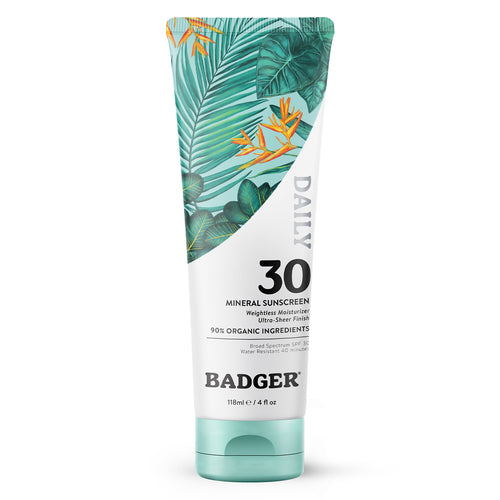
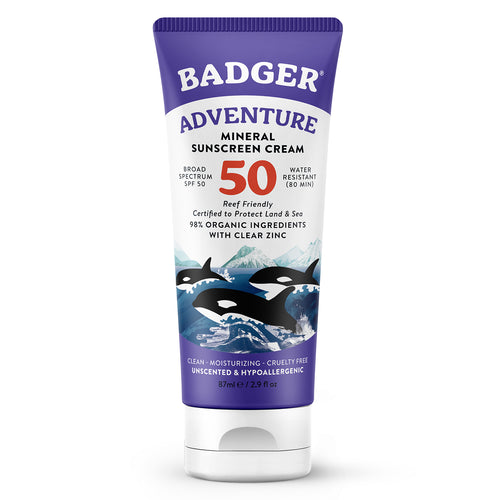
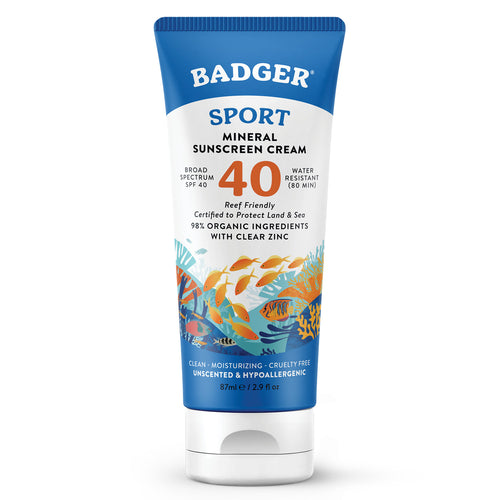
Badger does not use any of these damaging ingredients in our sunscreens and they are safe for coral reefs and the environment.


Elkhorn Coral

You may have read in reports, such as "Sunscreen Killing off Coral" by National Geographic and "Sunscreen Wipes Out Corals" by NatureNews, that sunscreens can damage coral. These and several other news stories were based on one prominent scientific study by Roberto Danovaro and his colleagues at the Marche Polytechnic University in Ancona, Italy.

Their paper is entitled, Sunscreens Cause Coral Bleaching by Promoting Viral Infections, and it was published in the peer reviewed journal Environmental Health Perspectives in 2008.

Read or download the original paper:
Danovaro R, Bongiorni L, Corinaldesi C, Giovannelli D, Damiani E, Astolfi P, et al. 2008. Sunscreens Cause Coral Bleaching by Promoting Viral Infections. Environ Health Perspect 116:441-447.


A brief summary of their findings:

  • Each year between 4000-6000 metric tons (4400-6600 US tons) of sunscreen washes off swimmers and snorkelers into coral reef environments.

  • Four common sunscreen ingredients were shown to cause complete coral bleaching at very low concentrations. They are:

    • Oxybenzone (benzophenone-3) – Sunscreen with several suspected human health effects.

    • Butylparaben - Preservative with several suspected human health effects.

    • Octinoxate (Ethylhexyl methoxycinnamate) - Sunscreen with several suspected human health effects.

    • 4-methylbenzylidene camphor (4MBC) - Sunscreen with several suspected human health effects. Allowed in Europe and Canada, not in USA or Japan.

  • Up to 10% of the world's coral reefs may be threatened by sunscreen induced coral bleaching.

Admittedly, other factors are likely a greater threat to coral reefs than sunscreens, namely global warming, pollution, and human activities. However, that is not a reason to ignore the results of this research. There has been limited criticism of this study(1) - overall it is good science, and the results should be taken seriously.


Are Badger's Sunscreens Reef Safe?

There is a "Reef Safe" test that can be performed on sunscreens, and we looked into it, but they test on fish, not on coral. We chose to forgo this test because it would be in violation of our Leaping Bunny No Animal Testing pledge. We do not suspect our sunscreens to have a negative impact on coral reefs for a few reasons. Badger sunscreens contain no chemicals whatsoever(2) and they are tested water resistant and tested biodegradable. The only active ingredient, Zinc Oxide, is a powdered mineral that will settle to the seafloor within a few hours(3), like silt, and become buried in the sediment. The base of our sunscreens (inactive ingredients that make up 80-88%) is made entirely of USDA Certified Organic plant oils, beeswax and vitamin E. These are all biodegradable and safe for any environment.


What can you do to ensure that your sunscreen is safe for the marine environment and coral reefs?

  • Use a sunscreen that does not have the ingredients shown to damage coral in Dr. Danovaro's research (see above). Badger sunscreens do not contain any of these ingredients.

  • Use a sunscreen that is water resistant 40min or water resistant 80min. This helps it to stay on your body and out of the water. Read about Badger's water resistant sunscreens.

  • Use a sunscreen that has been tested biodegradable. This claim is largely under regulated, so you may need to contact the company to verify their claim. This ensures that the product will break down in the environment. Read about Sunscreen biodegradability.

  • Reef safe claims on sunscreen labels are unregulated and therefore potentially meaningless. You really have to look at the ingredients and judge for yourself.


(1) SPF: Sun Protection Facts or Fictions?

(2) We do not consider zinc oxide (ZnO) to be a chemical, as compared to certain chemicals like octocrylene (C24H27NO2). Click here to read more about our zinc oxide.

(3) Using Stoke's Law and the following variables (particle diameter = 6.88µm; particle density = 5606kg/m3; seawater density = 1025kg/m3) we calculate a settling rate of 48cm/hr or about a foot and a half per hour.